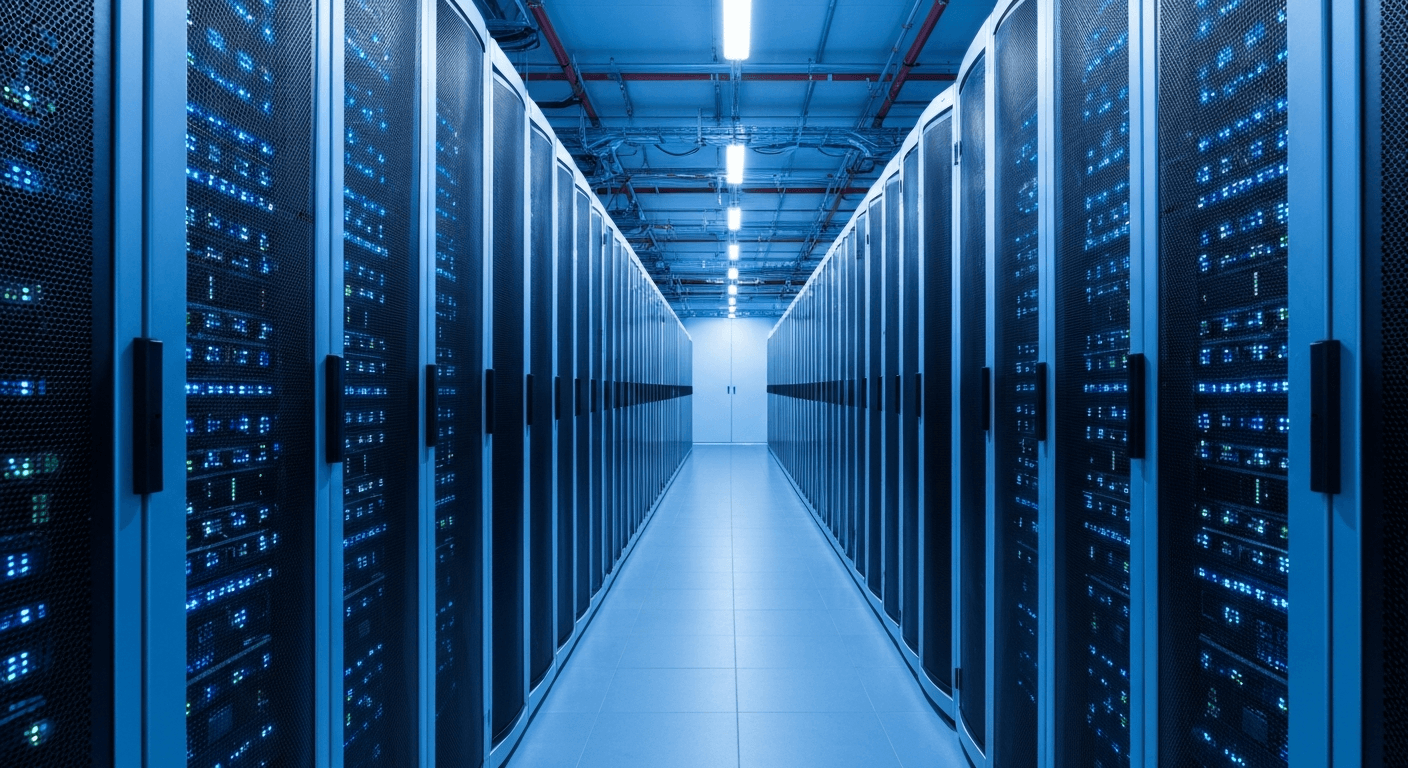
Four of the biggest US tech companies are on track to spend a combined sum well over roughly $300 billion building AI data centers in 2026. That figure is capital expenditure — capex — and it is the cash-flow line that decides whether Microsoft (MSFT) is investing for dominance or burning shareholder cash.
What is capital expenditure?
Capital expenditure is money a company spends to buy or upgrade long-lived physical assets — data centers, factories, machinery, real estate. Unlike a normal operating expense, it is not fully deducted in the year it is spent; instead it sits on the balance sheet and depreciates over years.
You will find it on the cash flow statement, usually labeled "purchases of property and equipment" under investing activities. It is almost always a negative number, because it is cash going out the door.
Capex is the clearest signal of where management thinks the future is — companies vote with their capital long before they talk about it on an earnings call. A surge in capex is a bet; your job is to judge whether it is a good one.
For Amazon (AMZN) and Alphabet (GOOGL), that bet in 2026 is overwhelmingly about AI infrastructure.
How do you measure capex intensity?
Divide capital expenditure by revenue. That ratio — capex intensity — tells you how much of every sales dollar a company must reinvest just to stay in the game. A software firm might run a few percent; a chipmaker or telecom can run well above 20%.
A second, sharper test is capex as a share of operating cash flow. If a company spends most of the cash its operations generate on capex, there is little left for dividends, buybacks, or debt reduction.
The most important derived number is free cash flow — operating cash flow minus capex. Free cash flow is what is left for shareholders after the business has fed itself, and heavy capex eats it alive. Our primer on fundamental analysis walks through how these cash-flow lines connect.
Why is AI capex scaring Wall Street?
Because the spending is enormous and the payback is uncertain. The hyperscalers — Microsoft (MSFT), Meta (META), Alphabet and Amazon — have ramped data-center capex to levels that visibly compress their free cash flow, all on the promise of AI revenue that is still ramping.
Investors are asking a simple question: will this capex earn an adequate return, or is it an arms race where everyone overspends and no one wins? Depreciation from all those servers will weigh on earnings for years regardless.
The market is comfortable with capex that builds a moat and nervous about capex that merely keeps pace with rivals. The same dollar can be either, and the distinction is rarely clear in real time.
The chip supplier on the other side of that spending, Nvidia (NVDA), is the immediate beneficiary — one company's capex is another's revenue.
Real examples: capex-heavy vs asset-light
The contrast between business models is stark. The table below frames the general profile — figures are approximate and meant to show relative scale.
| Company |
Capex profile |
What it means |
| Amazon (AMZN) |
Very high (AWS + logistics) |
Free cash flow swings with the buildout |
| Microsoft (MSFT) |
High and rising (AI cloud) |
Capex now a major call on cash flow |
| Meta (META) |
High (AI + data centers) |
Depreciation will pressure margins |
| Oracle (ORCL) |
Rising sharply (cloud capex) |
Funding growth partly with debt |
| Salesforce (CRM) |
Low (asset-light software) |
Converts more revenue to free cash |
Notice the bottom row. Salesforce (CRM) is asset-light — it rents most of its infrastructure — so it converts a much larger share of revenue into free cash flow. Oracle (ORCL), by contrast, is spending heavily to catch up in cloud, which is why its capex trajectory matters so much to its story.
Common mistakes reading capex
The first mistake is treating all capex as equal. "Maintenance capex" merely keeps existing assets running; "growth capex" expands capacity. A company spending heavily on growth is very different from one spending just to tread water.
The second mistake is ignoring the lag. Capex hits cash flow immediately but shows up in earnings slowly, as depreciation, over many years. A capex boom today is an earnings headwind tomorrow.
A company can look highly profitable while quietly out-spending its own cash generation — the income statement hides what the cash flow statement reveals. Always read both.
A third trap is comparing capex intensity across unlike industries. A utility, a railroad, and a software firm live on completely different capex curves, so cross-sector comparisons mislead.
Is high capex always bad?
No. High capex is how great franchises get built. The railroads, the telecom networks, the cloud platforms — all required years of heavy spending before they became cash machines.
The question is return on that investment. If a company can deploy capital at returns above its cost of capital, more capex creates value, not less. If it cannot, the spending destroys value no matter how visionary it sounds.
That is why the smartest way to judge capex is alongside returns on invested capital over time. Capex is only as good as the returns it eventually earns — spending is a means, not an achievement. Our overview of investment strategies covers how to weigh reinvestment against returns to shareholders.
Pro tips for judging capex
First, track capex intensity over several years, not one quarter. A rising trend signals a company entering an investment phase; a falling trend often precedes a surge in free cash flow.
Second, separate growth from maintenance capex where management discloses it. The split tells you how much of the spending is optional versus required.
Third, pair capex with guidance. When a company like Meta (META) raises its capex outlook, ask what revenue or cost savings it expects in return — and whether that math is credible. If management cannot articulate the return, be skeptical.
Ready to analyze these stocks yourself? Search any ticker on MainRatios to see valuations from 6 legendary investors - free.