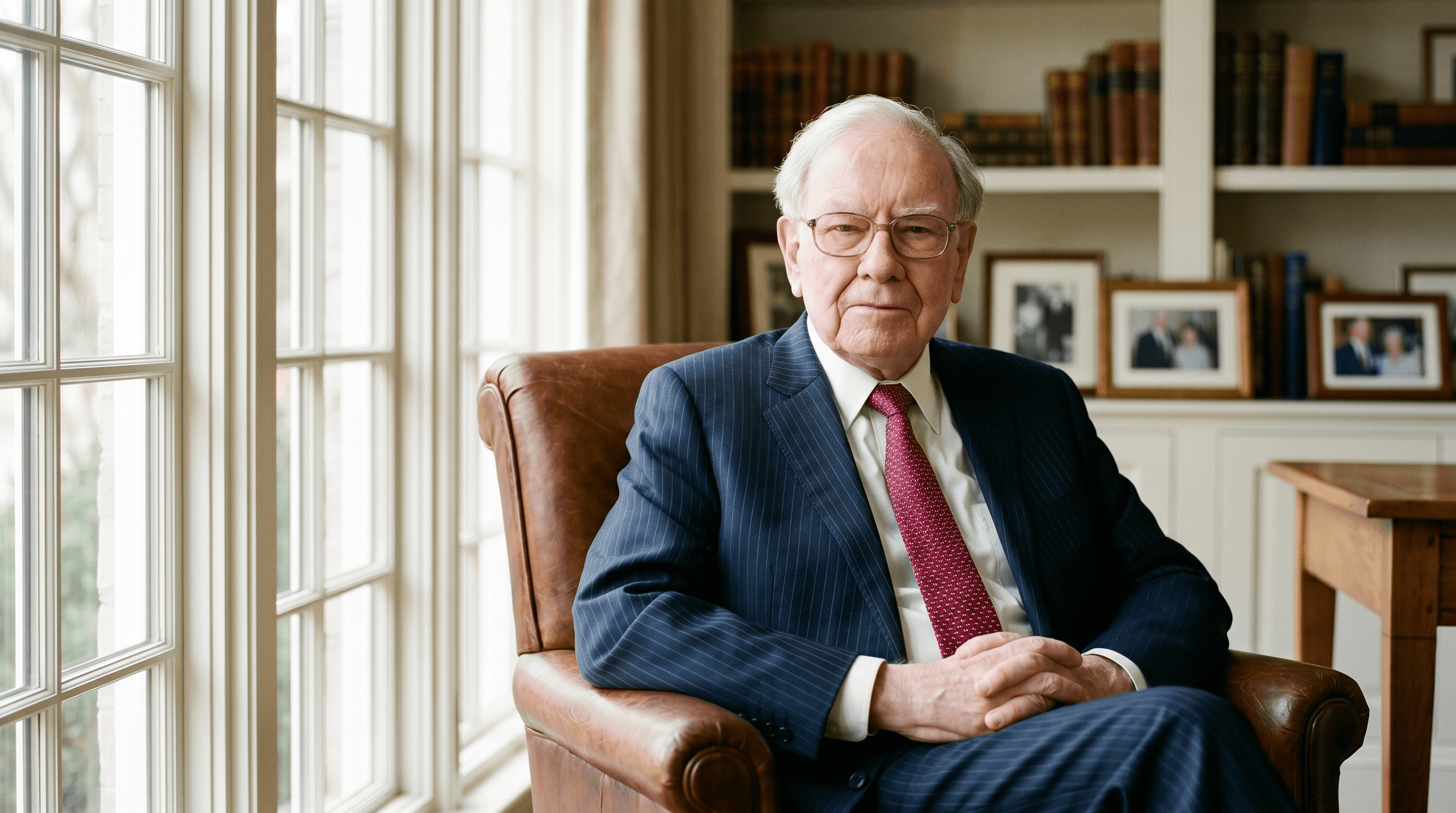
Howard Marks: The Oaktree Master of Market Cycles
When Lehman collapsed in 2008, most investors froze. Howard Marks deployed billions into the wreckage - and turned fear into one of his greatest wins.

JPM ranks #84 of 150 · score 49. These 3 lead the sector:


Key Takeaways
- Howard Marks built Oaktree Capital into one of the world's largest distressed-debt investors by buying when others panic.
- His core edge is "second-level thinking" - asking not "is this good?" but "is this better or worse than the crowd believes?".
- He insists you cannot predict the future, but you can prepare for it by reading where you are in the market cycle.
- The caution: his patient, contrarian style can look wrong for years before it looks brilliant.
When Lehman Brothers collapsed in 2008 and the financial world went into freefall, most investors were paralyzed by fear. Howard Marks did the opposite - he deployed billions of dollars into the wreckage, buying distressed debt that everyone else was desperate to sell.
The $6 Billion Bet Most Investors Were Too Scared to Make
In the darkest weeks of the 2008 crisis, Oaktree moved aggressively into distressed corporate debt while credit markets were pricing in catastrophe. Reporting from the period describes the firm deploying on the order of $6 billion into the panic.
The bet worked because Marks understood something the panicked sellers did not. When fear is universal, prices stop reflecting value and start reflecting emotion - and that gap is where the largest opportunities hide. As markets healed, those deeply discounted securities recovered powerfully.
This single episode captures his entire career: cautious for years, then boldly opportunistic at the exact moment that requires the most nerve.
From Citibank to Oaktree: The Origin Story
Marks began his career at Citibank in the late 1960s, eventually running its high-yield and convertible securities efforts. There he learned that unloved, "below-investment-grade" assets could be mispriced precisely because respectable investors avoided them.
In 1995 he co-founded Oaktree Capital Management with a group of colleagues. The firm specialized in credit and distressed debt and grew into a giant, managing roughly $200 billion in assets - a scale that made Marks one of the most influential voices in credit markets.
He is equally known for his client memos, which he has written since 1990. Warren Buffett once said that when a memo from Marks lands in his inbox, it is the first thing he opens - rare praise from the world's most famous investor.
What Is Howard Marks's Investment Philosophy?
Risk control comes first - returns come second. Marks argues that great investing is not about reaching for the highest returns, but about earning solid returns while surviving the inevitable bad years.
His philosophy rests on a deep respect for cycles. Markets, he says, swing like a pendulum between greed and fear, and almost never sit at the sensible midpoint for long. The investor's job is to read where the pendulum is, not to forecast exactly when it will turn.
You can't predict, but you can prepare - that line, more than any other, sums up how Marks thinks about an unknowable future. This cycle-aware mindset puts him alongside the other legends in our super investors guide.
The Five Principles Behind His Approach
His decades of memos distill into a handful of durable rules. Each one is simple to state and difficult to live by.
- Risk means the probability of permanent loss, not price volatility.
- The market cycle always turns - excess optimism and excess pessimism both correct.
- Price is what matters: a great company can be a bad investment if you overpay.
- Be contrarian, but thoughtfully - the crowd is right most of the time and catastrophically wrong at the extremes.
- You cannot control outcomes, only the quality of your decisions.
The fourth principle is the subtlest. Being contrarian for its own sake is just a different way to be wrong; the skill is identifying the rare moments when the consensus has detached from reality.
What Is "Second-Level Thinking"?
Second-level thinking is asking what the crowd has already priced in, not just whether something is good or bad. First-level thinking says "this is a great company, I'll buy it." Second-level thinking says "this is a great company, but everyone knows it and the price already assumes perfection - so the risk is to the downside."
Marks argues that superior returns require thinking differently and better than the consensus. If your reasoning matches everyone else's, your results will match the market's too - by definition, you cannot outperform the crowd by agreeing with it.
It is demanding, uncomfortable work. You can read more about how this fits into broader investment strategies and the other approaches we profile.
Where Does Cycle-Aware Capital Hunt?
In the wreckage that fear leaves behind. Distressed and contrarian investors like Marks do not chase what is working; they hunt where forced selling and pessimism have pushed prices below underlying value - typically in beaten-down sectors during crises.
The table below is illustrative of the kinds of dislocations where this approach has historically found opportunity. It reflects the framework, not a current Oaktree equity portfolio.
| Dislocation | Era | Representative names |
|---|---|---|
| Banking crisis | 2008-2009 | JPMorgan (JPM), Bank of America (BAC), Wells Fargo (WFC), Citigroup (C) |
| Travel collapse | 2020 | Carnival (CCL), Royal Caribbean (RCL) |
| Energy busts | 2015-2016, 2020 | Occidental (OXY), Devon Energy (DVN) |
| Auto downturns | Recurring | Ford (F), General Motors (GM) |
The 2008 banking panic is the textbook case: shares of JPMorgan (JPM), Bank of America (BAC), Wells Fargo (WFC), and Citigroup (C) were priced for collapse, yet the strongest survivors compounded enormously for those who bought the fear.
The 2020 shutdown did the same to travel, hammering Carnival (CCL) and Royal Caribbean (RCL). Energy busts repeatedly crushed Occidental (OXY) and Devon Energy (DVN), while Ford (F) and General Motors (GM) cycle hard with the economy. The common thread: capital is hunting the moment of maximum pessimism, not the moment of maximum comfort.
How Strong Has Oaktree's Performance Been?
Strong and remarkably durable, especially in its distressed-debt strategies. Over multiple decades and several crises, Oaktree's flagship funds have compounded at attractive double-digit rates, with their best vintages launched in the depths of downturns.
The pattern is consistent: the firm raises and deploys capital most aggressively when markets are falling apart, then harvests gains through the recovery. That counter-cyclical rhythm, not any single trade, is the real engine of the long-term results.
The honest caveat is temperament. This style can underperform for long stretches during euphoric bull markets, when caution feels like a cost - which is exactly why so few investors can actually follow it.
Lessons for the Everyday Investor
You do not need billions to apply Marks's ideas. The first lesson is to think about risk as the chance of permanent loss, and to build a portfolio that survives bad years rather than one optimized only for good ones.
The second is to pay attention to sentiment. When everyone is euphoric and no price seems too high, that is the time for caution; when everyone is terrified and selling, that is when bargains appear.
The third is humility. You will not call the top or the bottom, and trying to is a fool's errand. Prepare for a range of outcomes, demand a margin of safety, and let the cycle do the heavy lifting over time.
Ready to analyze these stocks yourself? Search any ticker on MainRatios to see valuations from 6 legendary investors - free.
Frequently Asked Questions
Howard Marks is the co-founder and co-chairman of Oaktree Capital Management, one of the world's largest distressed-debt and credit investors. He is also famous for his widely read investor memos, which he has published since 1990.