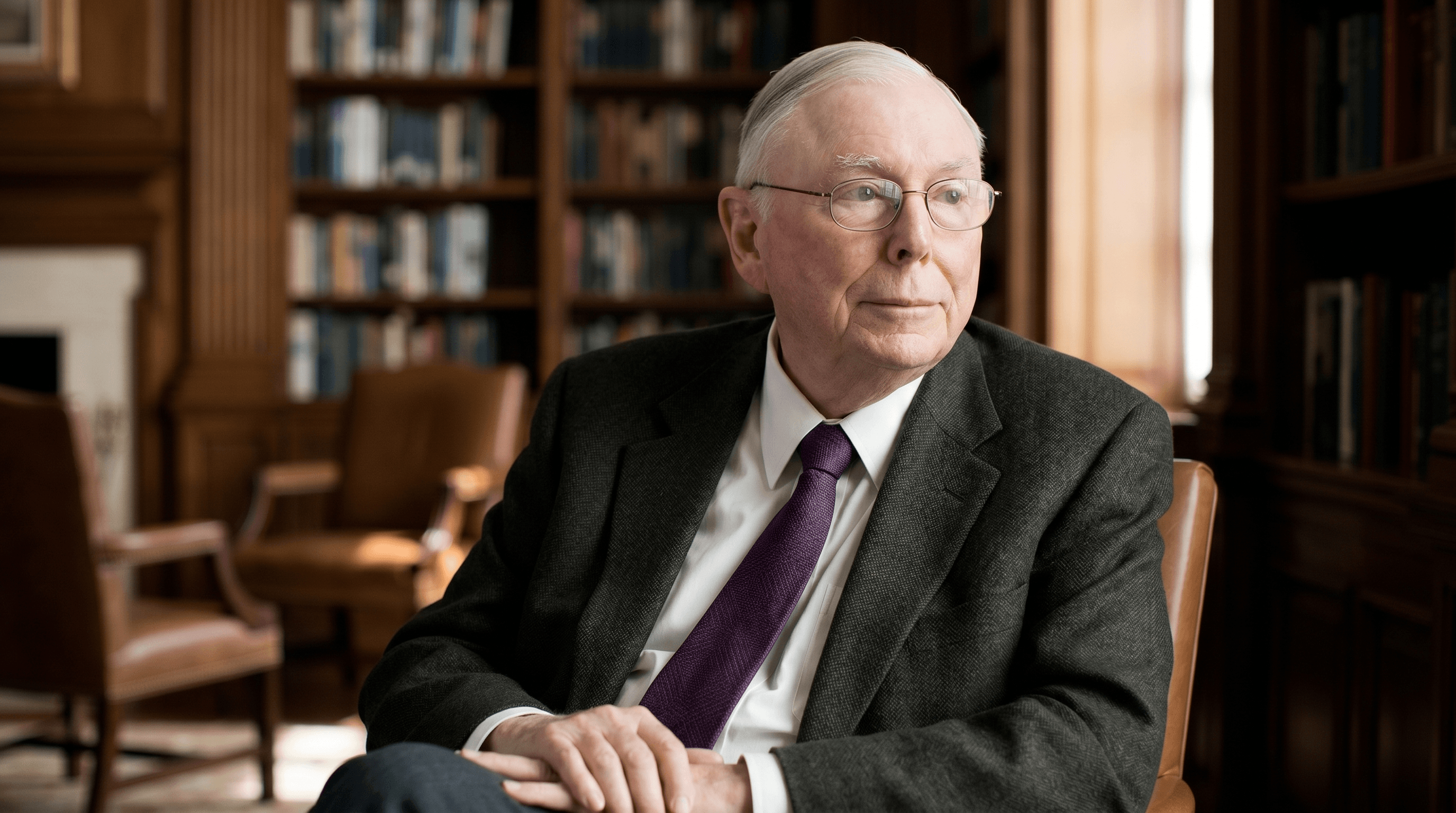
Terry Smith built one of Europe's most successful equity funds — Fundsmith — by following just three rules: buy good companies, do not overpay, and do nothing. By 2026 the fund managed roughly ~$19B with one of the smallest portfolios of any large global equity manager, often around 25-30 names.
Origin story: how a banking CEO became "the English Buffett"
Smith spent two decades in financial services — eventually as CEO of broker Tullett Prebon — before launching Fundsmith in 2010 with personal capital and a deliberately concentrated mandate. He was already known in London for blunt, often controversial commentary on accounting practices.
His 1992 book Accounting for Growth dissected aggressive accounting at FTSE-100 companies and effectively cost him his job at UBS. That experience left him obsessed with cash-based earnings and skeptical of "adjusted" metrics — a discipline that became the bedrock of Fundsmith's stock selection.
By 2026, Fundsmith Equity Fund had compounded at roughly ~14% annualized over its life — beating most active global equity peers despite (or because of) holding fewer than ~30 stocks at a time.
What is Smith's investment philosophy in one paragraph?
His one-paragraph version: invest only in good companies — defined as businesses with high returns on operating capital, recurring demand, durable competitive advantages, and resistance to technological obsolescence. Then refuse to overpay. Then refuse to trade.
The philosophy is closer to Warren Buffett's than to traditional growth or value investing. Smith treats stock selection as a long-duration ownership decision, not a portfolio-construction exercise — and that single mental shift drives nearly every other rule he follows.
What are Smith's 5 key principles?
The five principles he repeatedly returns to:
1. Buy good companies. He defines "good" mathematically — a high return on operating capital employed (ROCE), with that return being earned consistently across cycles. Most of the global universe fails this filter immediately.
2. Don't overpay. Smith uses free cash flow yield, not price-to-earnings, as his primary valuation metric. He has paid above ~30x earnings for high-quality compounders when the FCF yield was attractive — a meaningful nuance that gets him called "growth at any price" by some critics.
3. Do nothing. Fundsmith's typical annual turnover is below ~5%. Most of his returns come from compounding inside the businesses he owns, not from his trading decisions — and excessive trading is mathematically guaranteed to underperform after taxes and fees.
4. Avoid the un-investable. Smith refuses to own banks, utilities, miners, oil companies, real estate, and most cyclicals. The screen eliminates roughly 60-70% of typical large-cap indices in one move.
5. Concentrate ruthlessly. Top 10 positions often account for ~50%+ of the fund. He believes excess diversification is a confession of ignorance.
Which famous quotes summarize his thinking?
A few that capture the discipline:
"If you can't explain to your spouse what the company does and why you own it, sell it."
"Most fund managers underperform because they trade too much. The cure is mostly inactivity."
"Index funds are not actually passive. They are momentum strategies — they overweight whatever has gone up most."
"We don't try to value precisely. We try to be approximately right rather than precisely wrong."
What are Terry Smith's notable trades and current holdings?
Fundsmith's published top holdings in early 2026 included a heavy bias to medical devices, life sciences tools, payment networks, and asset-light franchise businesses.
| Company |
Sector |
Why Smith owns it |
| Stryker (SYK) |
Medical devices |
Orthopedics + Mako robotic surgery moat |
| IDEXX Laboratories (IDXX) |
Veterinary diagnostics |
High recurring revenue + global pet humanization trend |
| Microsoft (MSFT) |
Software |
Cloud + Office cash flow franchise (trimmed in early 2026) |
| Meta (META) |
Digital advertising |
Ad ROAS franchise — trimmed on valuation |
| Mastercard (MA) |
Payments |
Network effect + global payments tailwind |
| Visa (V) |
Payments |
Same playbook as MA, slightly less exposure now |
| Moody's (MCO) |
Financial data |
Duopoly + recurring credit ratings revenue |
| PepsiCo (PEP) |
Consumer staples |
Snack pricing power + Frito-Lay moat |
| Costco (COST) |
Retail |
Membership economics + flywheel |
| Automatic Data Processing (ADP) |
Payroll services |
Embedded software switching costs |
| Waters (WAT) |
Lab instruments |
High-ROIC instrumentation franchise — added to in 2026 |
The pattern is clear: every name has high ROCE, recurring revenue, and a moat that compounds without heavy capex.
Why does Smith dislike most of Wall Street?
Three reasons, repeated across his annual letters.
Wall Street activity is mostly about generating fees, not improving outcomes. He has called the industry's emphasis on quarterly trading "an architecture of expensive distraction."
Most fund managers fail to beat their benchmarks after fees and taxes — and the math behind that failure is closer to a tautology than a controversy. Smith's response was to launch a fund with very low turnover and a single-share-class structure that minimizes friction.
Index investing is not actually passive. Because index funds rebalance based on market cap, they buy more of whatever has gone up. That makes index funds a momentum strategy in disguise — concentrating risk in whatever cohort the market has just rewarded.
For complementary views on long-duration ownership, see our investor profiles hub.
Through 2025, Fundsmith Equity Fund has compounded at roughly ~14% annualized in GBP since 2010. That is meaningfully above the MSCI World index over the same period, although the fund has had two notable underperformance episodes — 2022 (large-cap quality faltered as energy and value rallied) and parts of 2023-2024 (the Mag 7 trade dominated).
Smith's 2026 letter framed the underperformance bluntly: the strategy is built for long compounds, not for matching whatever sector the market is rotating into. Long-term Fundsmith investors who held through both episodes have still meaningfully beaten passive global equity benchmarks.
For more context on long-duration compounding strategies, our investment strategies hub goes deeper.
What lessons can a regular investor take from Terry Smith?
Three apply directly to a personal portfolio.
Lesson 1: Buy fewer companies, hold them longer. Concentration plus patience beats trade-driven activity for most investors. If the math worked for a $19B fund, it works for a $50,000 retail account.
Lesson 2: Use cash-based valuation metrics. FCF yield, not P/E. Many high-quality businesses look "expensive" on earnings but reasonable on cash. The flip is also true.
Lesson 3: Limit your investable universe deliberately. If you screen out cyclicals, financials, and capital-heavy industries, you remove most of the categories where retail investors typically lose money — and you give yourself permission to study the remaining names deeply.
The honest counter-argument: Smith's strategy can underperform for years when the market rewards a different style. You either accept that volatility-of-return-versus-benchmark or you should not run this strategy at all — there is no "Fundsmith with active sector rotation" middle ground that actually works.
Ready to analyze these stocks yourself? Search any ticker on MainRatios to see valuations from 6 legendary investors - free.