Oil Past $110: How the Iran Conflict Is Reshaping Your Portfolio in 2026
With crude oil surging past $110 per barrel amid the Iran war, energy stocks are soaring while airlines and retailers bleed. Here is who wins, who loses, and how to position your portfolio.

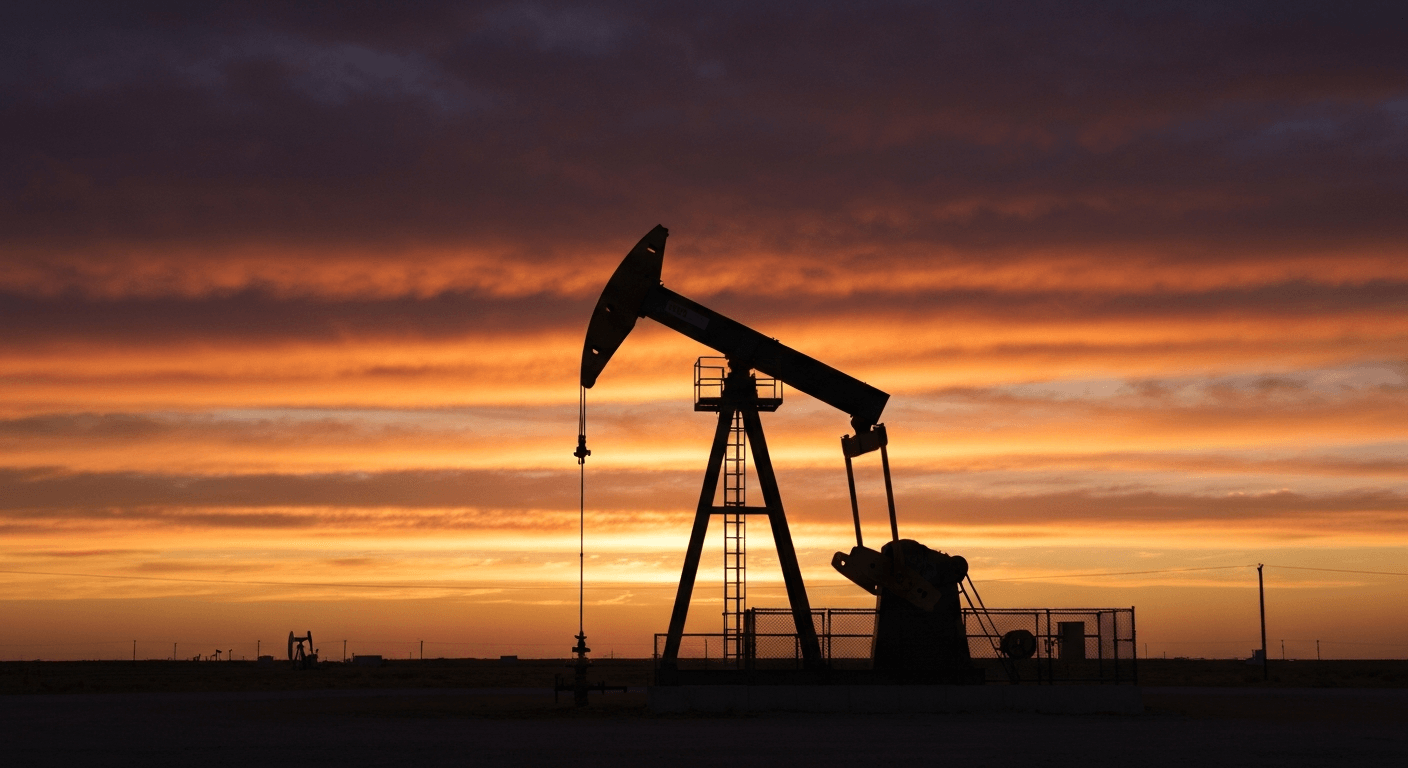
When West Texas Intermediate crude futures ripped past $110 per barrel in the first week of April 2026, it was not a surprise to anyone who had been watching the Strait of Hormuz. It was a wake-up call. The Iran conflict, now entering its third month, has done what decades of OPEC negotiations could not: it has made energy the single most important variable in every portfolio on the planet.
If you are still treating oil as a sideshow in your investment thesis, you are already behind. Here is what is actually happening, who is winning, who is losing, and what you should be watching next.
The Geopolitical Backdrop: Why Oil Is Moving
President Trump told the nation in late March that the Iran conflict would continue for at least two to three more weeks. Markets reacted immediately. Crude surged nearly 10% in a single session, and the ripple effects touched every corner of the global economy.
The Strait of Hormuz, through which roughly 20% of the world's oil supply passes daily, has become the epicenter of the crisis. Iranian state media reported that Tehran is working with Oman on a protocol to monitor ships passing through the strait, but traders remain skeptical that any agreement will hold. Every headline out of the Middle East sends crude futures swinging by $3 to $5 in minutes.
This is not a temporary supply disruption. The conflict has fundamentally altered the risk premium baked into every barrel of oil, and that premium is unlikely to disappear even if a ceasefire materializes tomorrow.
The Winners: Energy Giants Printing Money
When oil trades above $100, the math for major energy companies becomes almost absurdly favorable. Most of these companies built their budgets assuming $60 to $70 oil. Every dollar above that drops almost straight to the bottom line.
ExxonMobil (XOM) has been the most obvious beneficiary. The company's upstream division generates approximately $1.5 billion in additional free cash flow for every $10 increase in crude prices. At $110, Exxon is looking at a potential windfall quarter that could dwarf even the record profits of 2022.
Chevron (CVX) is in a similar position. Its Permian Basin operations are among the lowest-cost production assets in the world, and the company's integrated model means it captures value across the entire supply chain from wellhead to gas pump.
Occidental Petroleum (OXY) — the company Warren Buffett has been steadily accumulating — stands out as a particularly interesting play. Berkshire Hathaway now owns roughly 28% of Occidental, and Buffett's thesis was always that oil prices would remain structurally higher than the market expected. The Iran crisis is proving him right.
The oilfield services companies are also seeing a surge in demand. SLB (SLB) and Halliburton (HAL) both reported strong order backlogs heading into Q1, and the conflict is accelerating spending on domestic production as the U.S. government pushes for energy independence.
| Stock | Sector | YTD Return | Forward P/E | Dividend Yield |
|---|---|---|---|---|
| XOM | Integrated Oil | +18.4% | 11.2x | 3.2% |
| CVX | Integrated Oil | +15.7% | 10.8x | 3.5% |
| OXY | E&P | +24.1% | 8.9x | 1.8% |
| SLB | Oilfield Services | +12.3% | 14.5x | 2.1% |
| HAL | Oilfield Services | +14.6% | 12.1x | 2.4% |
| COP | E&P | +16.9% | 10.3x | 2.9% |
| EOG | E&P | +13.2% | 9.7x | 3.1% |
The Losers: Airlines and Consumer Stocks Under Pressure
Every dollar that oil rises is a dollar that gets pulled from other parts of the economy. Jet fuel is the single largest operating expense for airlines, and the surge to $110 crude translates to roughly $3.50 per gallon jet fuel — a level that makes profitable domestic routes marginal and international routes a coin flip.
Delta Air Lines (DAL) has already warned investors that its Q1 fuel costs will come in $400 million above its original guidance. United Airlines (UAL) issued similar guidance, noting that it has hedged only about 30% of its fuel exposure for the first half of 2026.
The pain extends beyond airlines. Rising gas prices act like a tax on consumers, and that shows up in reduced spending at discretionary retailers. Nike (NKE) saw its shares slide after multiple Wall Street firms cut price targets, citing the broader consumer spending headwinds driven by energy costs. Even Amazon (AMZN) faces headwinds through higher shipping and logistics costs across its fulfillment network.
Defense Stocks: The Quiet Beneficiaries
While energy gets the headlines, defense contractors have been on a tear since the Iran conflict began. Lockheed Martin (LMT) is up over 20% year-to-date, driven by increased procurement spending and new contracts for missile defense systems. RTX Corporation (RTX) — the parent of Raytheon — has seen similar gains as demand for its Patriot missile systems has surged.
Northrop Grumman (NOC) is another standout. The company's B-21 Raider bomber program and its position in space-based surveillance make it a direct beneficiary of increased defense budgets across NATO allies.
The defense theme is not just about the current conflict. European nations are dramatically increasing military spending, and the U.S. defense budget for fiscal year 2027 is expected to exceed $1 trillion for the first time. This creates a multi-year tailwind for the entire sector.
What Smart Money Is Doing Right Now
Institutional investors are not panicking. They are rotating. Data from fund flows shows a clear shift out of growth-heavy technology positions and into energy, defense, and value stocks. This is not a wholesale abandonment of tech — it is a recognition that the risk-reward calculus has shifted.
The options market tells an even more interesting story. Call volume on energy ETFs like XLE has spiked to levels not seen since the 2022 energy crisis. Put volume on consumer discretionary ETFs like XLY has increased by 40% month-over-month. Smart money is not just betting on oil staying high — it is actively hedging against consumer weakness.
For individual investors, the lesson is clear: portfolio concentration in any single theme is dangerous when geopolitical risk is elevated. If you are 100% in tech and growth, you have zero exposure to what is currently the most powerful macro trend in the market.
The Inflation Wild Card
Here is the part that most market commentary misses. Oil at $110 is not just about energy company earnings. It is about inflation. Every $10 increase in crude adds approximately 0.2% to headline CPI over a six-month lag. If oil stays above $100 through the summer, the Federal Reserve's rate-cutting plans could be delayed or reversed entirely.
The bond market is already pricing this in. The 10-year Treasury yield has climbed back above 4.5%, and inflation expectations embedded in TIPS spreads have widened significantly. If the Fed is forced to pause rate cuts, the entire thesis behind the 2026 bull market — cheaper money driving earnings expansion — gets called into question.
This creates a particularly tricky environment for growth stocks, which are most sensitive to interest rate expectations. Companies trading at 30x or 40x forward earnings need low rates to justify those valuations. If the Fed stays hawkish because oil is keeping inflation sticky, the math gets very uncomfortable for highfliers.
How to Position Your Portfolio
There is no single right answer here, but there are principles that tend to work during energy-driven market disruptions. For a deeper understanding of how to evaluate stocks in this environment, check out our guide on fundamental analysis.
First, diversify across sectors. If your portfolio is 80% technology, consider trimming some of those positions and adding energy and defense exposure. You do not need to go all-in on oil stocks, but having zero exposure when crude is above $100 is a significant portfolio risk.
Second, focus on quality. In uncertain environments, companies with strong balance sheets, low debt, and consistent free cash flow generation tend to outperform. This is true whether you are looking at energy stocks or any other sector. Our guide to investment strategies covers how to identify high-quality companies across market conditions.
Third, watch the yield curve. If 10-year yields continue climbing while short-term rates stay elevated, it signals that the bond market expects inflation to persist. That is bearish for growth and bullish for value, energy, and financials.
Fourth, do not chase. Energy stocks have already had a strong run. Buying XOM after an 18% rally is different from buying it at the start of the move. Consider dollar-cost averaging rather than making large lump-sum bets.
Key Takeaways
The Iran conflict has fundamentally changed the market landscape in 2026. Oil above $110 is a massive tailwind for energy producers and a headwind for consumers and airlines. Defense stocks are benefiting from increased spending. The inflation implications could force the Fed to rethink its rate-cutting timeline.
The stocks to watch closely are XOM, CVX, and OXY on the energy side, LMT and RTX in defense, and DAL and NKE as gauges of consumer pain. The market is pricing in a lot of uncertainty, and that means opportunities for investors who do their homework.
Ready to analyze these stocks yourself? Search any ticker on MainRatios to see valuations from 6 legendary investors - free.
See the full analysis of $XOM
Live P/E chart, financials, and valuations from 6 legendary investors — free.
Analyze $XOM