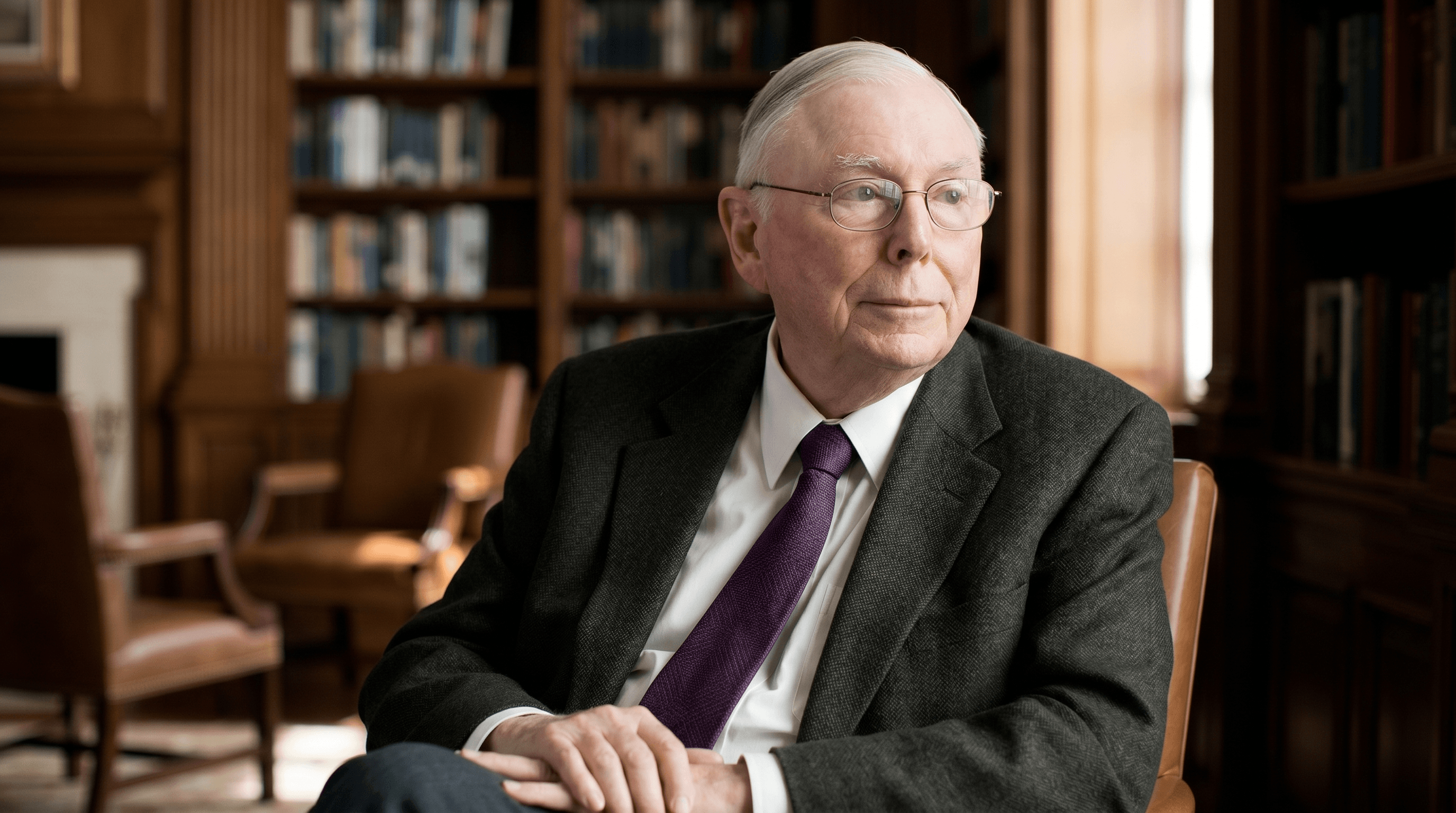
Joel Greenblatt: The Magic Formula Behind 50% Annual Returns
Joel Greenblatt compounded at ~50% a year for a decade. The Magic Formula he later published is the public version of that edge — applied to AAPL, V, and MA…

AAPL ranks #99 of 169 · score 47. These 3 lead the sector:


Puntos clave
- Greenblatt's Gotham Capital posted ~50% annualized returns from 1985-1994 — multiples of Warren Buffett's partnership-era pace.
- The Magic Formula uses just two metrics: ranked earnings yield (cheapness) and ranked return on capital (quality).
- Backtests from 1988-2004 showed the Formula returning around 33% annualized vs roughly 14% for the S&P 500.
- The Formula's edge has narrowed as it became famous, but the principle — combining quality and value — still works.
- The hard part is not the math. It is sticking with the strategy through the inevitable 2-3 year stretches when it underperforms.
From 1985 to 1994, Joel Greenblatt's Gotham Capital compounded capital at roughly 50% a year — net of fees, before he returned outside money. The Magic Formula he later published — applied today to screens that still surface names like Visa (V) and Apple (AAPL) — is the public stripped-down version of that edge.
Joel Greenblatt is the rare investor whose track history was so strong that almost no one believes the numbers when they first hear them. Roughly 50% annualized over 10 years means $1 turned into about $57 before his fund switched models. The story is real, the strategy was systematic, and the public version is one of the most accessible quant frameworks in retail investing.
How Did Greenblatt Build His Edge?
Through 10-Ks nobody else read. Greenblatt was born in 1957 and arrived at the University of Pennsylvania's Wharton School thinking he wanted to be a chemistry researcher. A summer reading detour through Benjamin Graham's The Intelligent Investor — the same book that shaped Warren Buffett — pulled him into investing. He stayed at Wharton for an MBA and joined the risk arbitrage desk at Bear Stearns shortly after.
In 1985 — still in his late 20s — Greenblatt founded Gotham Capital with about ~$7 million from family-office investor Michael Milken's circle. The fund focused on special situations: spin-offs, restructurings, post-bankruptcy equities, recapitalizations, and other corner cases the broader market priced inefficiently because of forced selling or analyst neglect.
Gotham's edge was not a single metric — it was the willingness to read 10-K filings nobody else read. That is a different kind of moat than a screener.
By 1994, Greenblatt had compounded the original ~$7 million at roughly 50% a year. He returned outside capital to investors, kept managing his own money, and pivoted to teach at Columbia Business School. The Magic Formula came out a decade later, after he had already stepped back from running outside money.
What Is the Magic Formula?
The Magic Formula is the simplest possible expression of Greenblatt's core insight: buy good businesses at cheap prices. It is a quantitative ranking system that combines two metrics, each ranked across the eligible universe.
The first metric is earnings yield, defined as EBIT (earnings before interest and taxes) divided by enterprise value. This is essentially "how much pre-tax operating profit am I getting per dollar of capital tied up in the business?" Higher is better — it means the stock is cheap relative to what the business actually earns.
The second metric is return on capital, defined as EBIT divided by net working capital plus net fixed assets. This is "how good is the business at generating profit from the capital it deploys?" Higher is better — it means the company is a quality compounder, not a capital-destroyer.
Each stock in the universe is ranked on both metrics. The two ranks are summed. The lowest combined-rank stocks are the Magic Formula's picks. That is the entire algorithm.
| Year Range | Magic Formula Annualized | S&P 500 Annualized | Spread |
|---|---|---|---|
| 1988-2004 (Greenblatt backtest) | ~33% | ~14% | +19 pts |
| 2003-2015 (independent backtest) | ~11.4% | ~8.7% | +2.7 pts |
| 2015-present | mid-single-digits | high single-digits | mostly negative |
| Long-run average (full sample) | low-double-digits | mid-single-digits | positive but volatile |
The honest read on the table: the spread has narrowed since the strategy was published. That is consistent with most public-knowledge edges and does not mean the principle is broken — it means the easy money came out as soon as the playbook was written down.
What Are the Five Principles Behind Greenblatt's Returns?
The pattern across every Greenblatt vehicle has been the same five rules. First, structure is more important than picks. Greenblatt's special-situations book at Gotham was systematized — every spin-off, every post-bankruptcy equity, every restructuring went through the same checklist. Replicating an inconsistent process is much harder than replicating a documented one.
Second, boring is profitable. Spin-offs are dumped indiscriminately by index funds and large-cap shops because the new entity does not fit their mandate. That forced selling creates a structural mispricing that has nothing to do with the business itself. Most retail investors look at a spin-off as an irritant; Greenblatt looked at it as a near-zero-cost lottery ticket.
Third, own the management's interests, not just the company's. Greenblatt explicitly preferred situations where insiders owned a meaningful stake and got rewarded for the same business outcomes that benefited shareholders. Recapitalizations and management buyouts often clear that test.
Fourth, portfolio sizing matters more than stock selection. Gotham ran ~6-8 concentrated positions and was willing to sit in cash when nothing met the criteria. The portfolio construction discipline was what protected the track history across cycles.
Fifth, patience is the actual edge. The Magic Formula's worst stretches lasted ~2-3 years. The investors who stuck with it earned the reported returns. The ones who quit during the underperformance booked single-digit annual losses and rotated into the next strategy at the worst possible time.
Famous Quotes That Capture the Philosophy
"Choosing individual stocks without any idea of what you're looking for is like running through a dynamite factory with a burning match. You may live, but you're still an idiot."
"If you just stick to buying good companies (ones that have a high return on capital) and to buying those companies only at bargain prices (at prices that give you a high earnings yield), you can end up systematically buying many of the good companies that crazy Mr. Market has decided to literally give away."
"The secret to investing is to figure out the value of something — and then pay a lot less."
The first quote captures Greenblatt's view that retail investors mostly fail because they have no framework, not because they pick badly. The second is the Magic Formula in plain English. The third is the Graham lineage — value investing as a discipline of arithmetic, not predictions.
What Stocks Match Greenblatt's Magic Formula Criteria?
The names rotate, but the DNA does not. Gotham's actual portfolio was rarely public — it was a private partnership that did not file 13Fs in its peak years. The Magic Formula and the later Gotham Funds (which run modified versions of the same approach) provide a public window. Stocks that have appeared in Greenblatt-style screens over the years include high-quality compounders trading at discounted valuations.
| Ticker | Name | Why It Fit Greenblatt-Style Criteria |
|---|---|---|
| AAPL | Apple | Best-in-class ROIC; cheap on earnings yield post-2018 dip |
| MSFT | Microsoft | High ROIC, cheap on EV/EBIT before the 2014-15 cloud re-rate |
| GOOGL | Alphabet | Compounding at near-record gross margins |
| V | Visa | Capital-light payment network — extreme ROIC |
| MA | Mastercard | Same network economics as Visa |
| MCO | Moody's | Duopoly ratings business with very high return on capital |
| JPM | JPMorgan Chase | Cheap on EBIT-to-EV during cyclical lows |
| COST | Costco | High ROIC subscription economics, occasionally cheap |
The names that screen well rotate through cycles. V and MA consistently rank near the top on return on capital. JPM and other financials cycle through the cheapness side of the screen during downturns.
How Has the Track History Held Up Over Time?
Spectacularly in the early years; more pedestrian since the strategy went public. The early Gotham track history (~50% annualized 1985-1994) belongs in a category with Buffett's partnership era and Jim Simons's Medallion fund. It is also the part of Greenblatt's history that is least replicable — special-situations investing requires hand-reading hundreds of 10-Ks per year and a willingness to underwrite outcomes that have no historical analog.
The later, public-facing returns on Gotham Funds — long-short and long-only mutual funds that Greenblatt has managed since the late 2000s — has been more pedestrian. Some years the funds have beaten the S&P 500; others they have lagged. Across the full cycle, the long-only Magic-Formula-style fund has tracked roughly in line with the index over five-year rolling windows.
The lesson is not that the Formula stopped working. It is that public, systematic strategies revert toward index-like returns once the edge is widely known. The principle that combining quality with cheapness produces durable outperformance is still right; the implementation has to evolve as the screen becomes crowded.
Lessons for Retail Investors From the Greenblatt Playbook
First, write down a process and follow it. The single biggest practical change a retail investor can make is to define their criteria before screening. Greenblatt's Magic Formula is exactly two rules. That is enough.
Second, tilt the portfolio toward businesses with high return on capital. V, MA, MCO, COST, and AAPL all share the same DNA — every dollar reinvested in the business produces a much higher dollar back. That compounding is the true source of long-run returns.
Third, accept underperformance windows. The historical Magic Formula had drawdowns of ~30-40% in some cycles and underperformance windows of ~2-3 years. The real test of any framework is whether you stick with it through those stretches.
For complementary reading, see our super investors library and the investment strategies guide for related frameworks from Buffett, Lynch, and others.
Ready to analyze these stocks yourself? Search any ticker on MainRatios to see valuations from 6 legendary investors - free.
Mira el análisis completo de $AAPL
Gráfico P/E en vivo, finanzas y valuaciones de 6 inversores legendarios — gratis.
Analizar $AAPLFrequently Asked Questions
Roughly yes. Sources vary slightly but Gotham Capital's reported return was near 50% annualized for the 1985-1994 window, and over a longer 1985-2005 frame the compounded number was still around 40% — multiples of any benchmark.