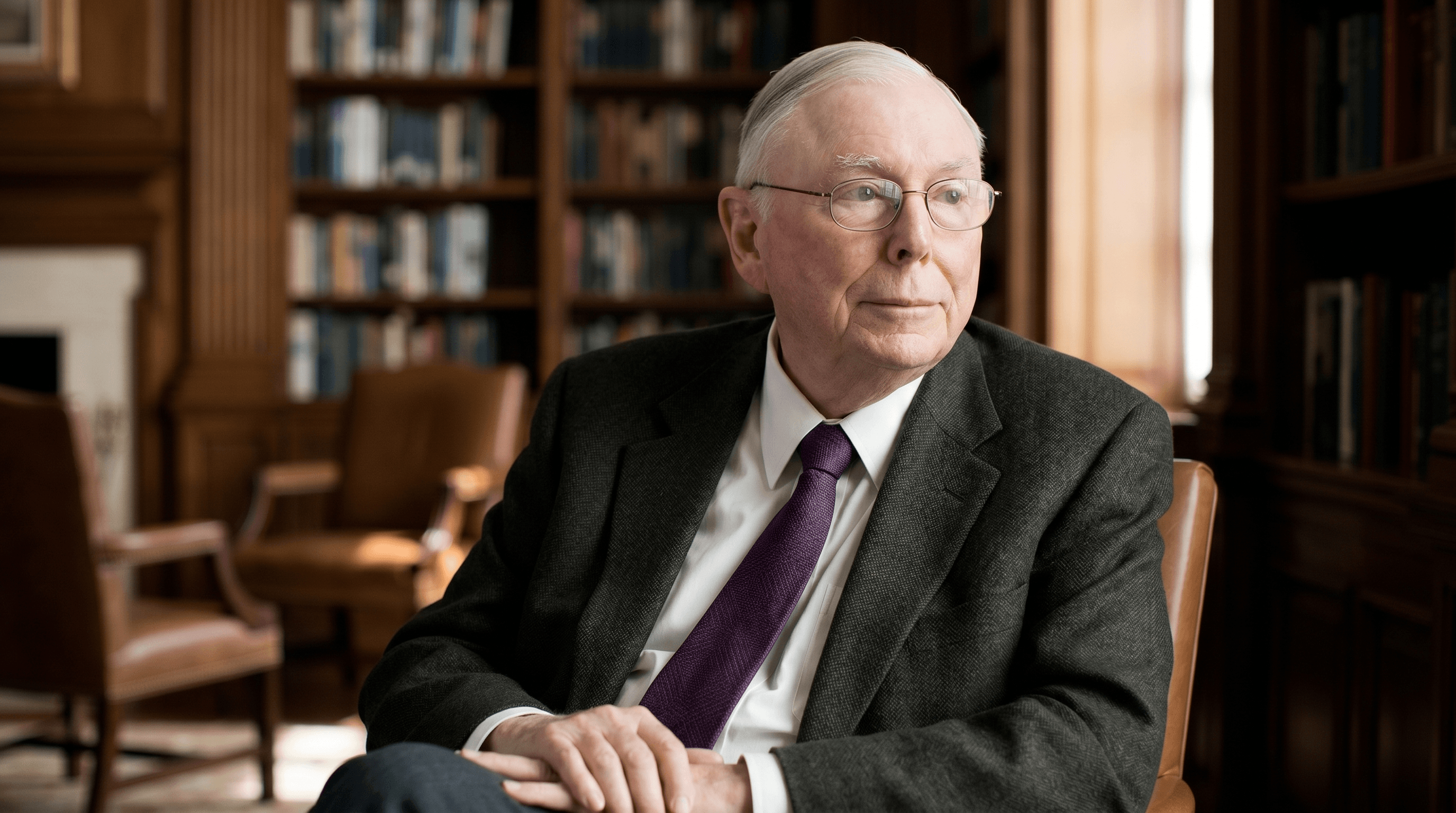
Chuck Akre: The Three-Legged Stool of Compounding
Chuck Akre turned a simple test for "compounding machines" into roughly 12% annual returns over decades. Here is his three-legged stool framework, in full.

MA ranks #25 of 150 · score 58. These 3 lead the sector:


Key Takeaways
- Chuck Akre built his reputation on owning very few "compounding machines" for very long periods.
- His "three-legged stool" demands a great business, great management, and a great reinvestment runway — all three, or pass.
- He prized return on equity and the ability to reinvest cash at high rates over headline growth.
- Long-time holdings like [MA], [V], and [MCO] show the strategy in action.
- The risk: paying up for quality works until growth slows, and concentrated quality portfolios can lag for years.
Over nearly three decades, Chuck Akre compounded capital at roughly 12% a year by refusing to buy almost anything — he reportedly passed on hundreds of companies for every one he owned. His secret was a deceptively simple test he called the "three-legged stool," and it reshaped how a generation of legendary investors thinks about quality.
Who is Chuck Akre?
A self-taught investor who turned an English-literature degree into one of the great quality-investing careers. Akre did not start as a stock picker — he began in the late 1960s as a stockbroker and taught himself investing by reading voraciously.
Two books reshaped him: works on the power of compounding and on what makes a business truly exceptional. He became obsessed with one question — what does a company that compounds shareholder wealth for decades actually look like?
He founded Akre Capital Management in 1989 and later ran the Akre Focus Fund. The word "focus" was literal: he held a tiny number of names and let them run.
Akre's edge was never speed or information — it was patience and an extreme unwillingness to settle for a merely good business when a great one might come along. Saying no was the strategy.
What is Akre's investment philosophy?
At its core, it is the pursuit of the "compounding machine": a business that can reinvest its own profits at high rates of return for many years. The longer that engine runs, the more wealth it builds for owners who simply hold on.
Akre measured this primarily through return on equity and the durability of that return. A company earning high returns on capital, with room to keep deploying capital at those rates, was his holy grail.
He cared far less about a cheap entry multiple than most value investors. Paying a fair price for an exceptional compounder, he argued, beats paying a cheap price for a mediocre one — because time does the heavy lifting only when the business is genuinely great.
What is the three-legged stool?
It is the framework Akre is famous for. A stool needs three legs to stand, and so does an investment worth holding for a decade.
| Leg | What he wanted | The test |
|---|---|---|
| The business | Durable high returns on capital | Can it defend its economics? |
| The management | Honest, skilled capital allocators | Do they think like owners? |
| The reinvestment | A long runway to redeploy cash | Can profits be reinvested at high rates? |
The first leg is a business with pricing power and high, durable returns on equity. The second is management that allocates capital like owners rather than empire-builders.
The third leg — the one most investors forget — is reinvestment. A wonderful business that cannot redeploy its cash at high rates eventually becomes a dividend payer, not a compounder.
If any leg is missing, Akre passed. That discipline is why his portfolios held so few names.
Five key principles
First, own quality and concentrate. A handful of genuinely exceptional businesses beats a sprawling portfolio of average ones.
Second, judge management by capital allocation. Watch what leaders do with free cash flow — reinvest, buy back stock, or waste it on bad acquisitions.
Third, prioritize reinvestment runway. Growth that can be funded internally at high returns is the rarest and most valuable trait.
Fourth, let winners run. Akre resisted trimming compounders simply because they had risen; selling a great business early is its own kind of mistake.
Fifth, do almost nothing. Activity is the enemy of compounding, and most portfolio "improvements" just add costs and taxes.
Famous quotes
Akre's commentary is plainspoken and quotable. A few capture the philosophy.
"We are looking for businesses that can reinvest their excess cash at above-average rates of return." That single line is the third leg of the stool.
"Our goal is to compound our capital at an above-average rate while incurring a below-average level of risk." Note the order — risk control sits beside return, not beneath it.
Notable trades and holdings
Akre's portfolios read like a list of toll-booth and reinvestment businesses. The table below maps representative long-term holdings to the leg of the stool they satisfy.
| Stock | Why Akre liked it | Stool leg |
|---|---|---|
| MA | Network toll on global payments | Business + reinvestment |
| V | Same payments moat, vast runway | Business + reinvestment |
| MCO | Ratings duopoly, high returns | Business |
| AMT | Tower leases, reinvestable cash | Reinvestment |
| ROP | Serial acquirer of niche software | Management |
Mastercard (MA) and Visa (V) are textbook Akre names: payment networks that earn a small toll on enormous transaction volume and reinvest at high rates. Moody's (MCO) brings a ratings duopoly with exceptional returns on capital.
American Tower (AMT) supplies the reinvestment runway through leased tower space, while Roper Technologies (ROP) embodies disciplined capital allocation as a serial acquirer. Other names in the compounder universe include O'Reilly Automotive (ORLY), Markel (MKL), and Domino's Pizza (DPZ), with Berkshire Hathaway (BRKB) as the original template.
How did Chuck Akre perform?
Very well — his flagship fund compounded at roughly 12% annually over the long run, comfortably ahead of the broad market across his tenure. Concentrated quality, held patiently, did exactly what he promised.
But the approach is not free of pain. Critics argue that paying premium multiples for quality works beautifully until growth decelerates — and when a compounder's reinvestment runway shortens, the stock can de-rate hard.
Concentrated portfolios also lag for stretches. A focus fund can trail the index for years when its handful of names are out of favor, which tests the patience the strategy depends on.
Lessons for you
You do not need Akre's scale to use his framework. The three-legged stool is a checklist any investor can apply before buying.
Ask whether the business has durable high returns, whether management allocates capital like owners, and whether profits can be reinvested at high rates. If you cannot answer yes to all three, keep looking.
Then study the super investors who share this quality-compounding lens, and run your own candidates through the legendary investor models before committing capital.
Ready to analyze these stocks yourself? Search any ticker on MainRatios to see valuations from 6 legendary investors - free.
See the full analysis of $MA
Live P/E chart, financials, and valuations from 6 legendary investors — free.
Analyze $MAFrequently Asked Questions
It is his test for a long-term holding: a great business with durable high returns, great management that allocates capital like owners, and a long runway to reinvest profits at high rates. If any leg is missing, he passes.