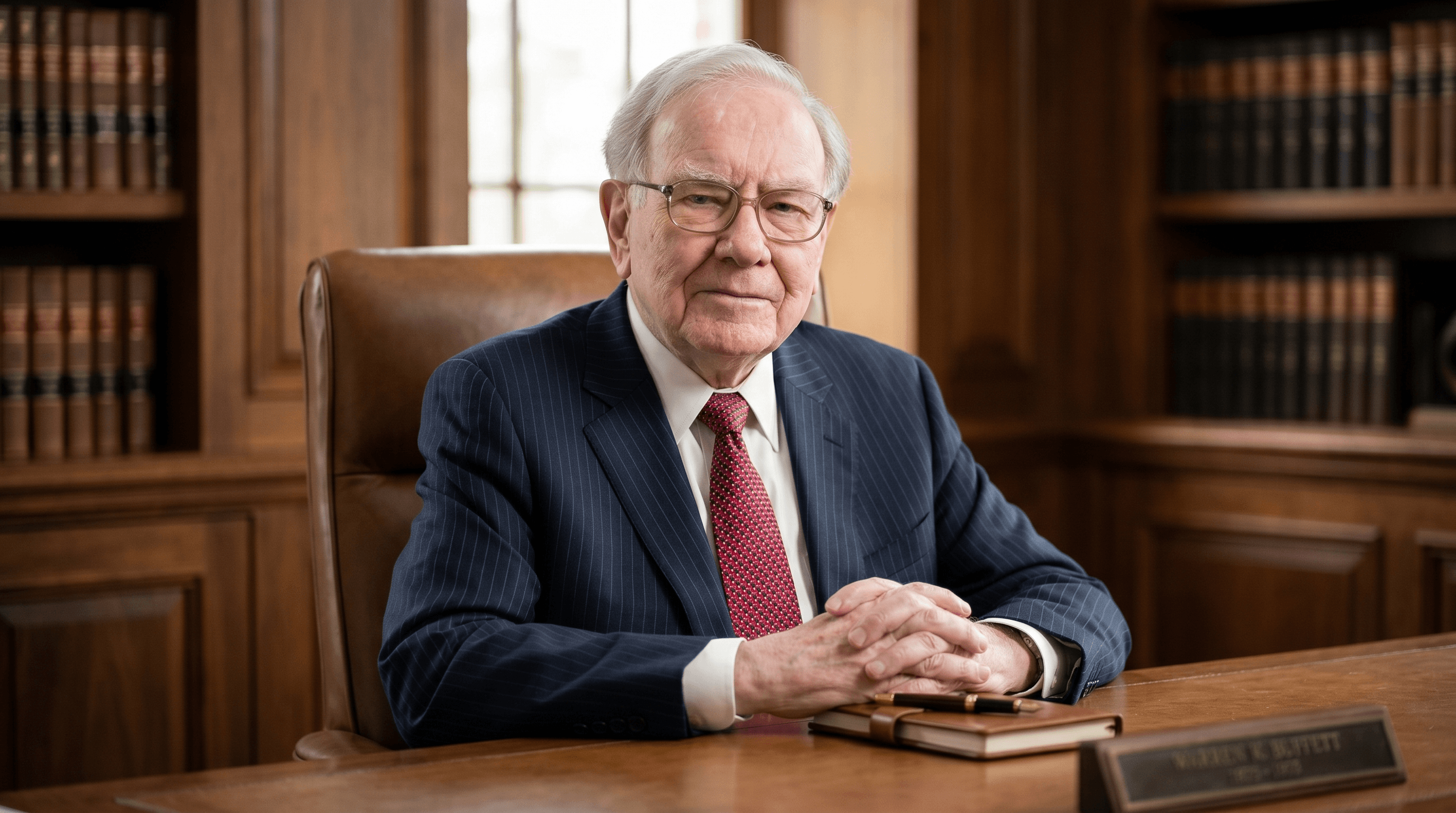
Warren Buffett has reportedly said the first thing he does when a Howard Marks memo lands in his inbox is open it. That endorsement, from arguably the most-quoted investor alive, is the simplest window into one of the most influential minds in modern markets.
Origin Story: From Citibank to Oaktree
Marks did not start out as a distressed-credit specialist. He spent the early part of his career at Citibank in the 1970s, running the convertible bond desk and then the high-yield (junk bond) operation. Those years taught him the most important lesson of his career: nothing is a good investment at any price, and nothing is a bad investment at any price.
In 1985 he moved to TCW (Trust Company of the West), where he and Bruce Karsh built one of the first dedicated distressed-debt operations on Wall Street. Distressed debt — the bonds of companies in or near bankruptcy — was at the time a niche corner of credit markets that almost no one wanted to touch. Marks and Karsh saw what others missed: the assets were mispriced because the buyers had all left, not because the businesses were worthless.
In 1995 they took the team out of TCW and founded Oaktree Capital Management with a handful of partners. Oaktree's identity was set from day one — opportunistic credit, real estate, and emerging markets, with an obsession over the price paid relative to the worst-case downside. Roughly three decades later, the firm manages around $200 billion across those strategies.
Why Does Marks Write Memos Instead of Pitching Stocks?
Because the memos are the product, in a sense more important than any single trade. Marks started writing memos to Oaktree clients in 1990, and continued through the founding of the firm and into the present day. The format is unusual for a Wall Street executive: long, discursive, philosophical, and almost never about a specific name. They are about how to think.
The memos cover topics like the boom-bust cycle in credit, the difference between risk and volatility, the dangers of forecasting, and the patience required to wait for "fat pitches." The audience has grown from a few hundred Oaktree clients to a community of tens of thousands of professional and retail investors who read each new memo within hours of release.
The memos are also Oaktree's marketing engine, in a way that no other alternative-asset firm has replicated. Where Apollo (APO), Blackstone (BX), and KKR (KKR) compete on scale and access, Oaktree competes on perceived intellectual honesty. The memos are the brand, and the brand is what allows the firm to charge alternative-asset fees.
What Are the 5 Principles That Define His Investing?
Marks's writing returns to the same handful of ideas with relentless discipline. Stripped to the essentials, the five that recur most often are:
-
Second-level thinking. First-level thinking says "this is a great company, I should buy it." Second-level thinking says "everyone knows it is a great company, so it is already priced as one — I should look for a great company that is mispriced."
-
The price you pay matters more than the quality of the asset. A wonderful business at an absurd price is a bad investment. A mediocre business at a deep discount can be a great investment. The buyer's discipline is what creates returns.
-
Risk is not volatility — it is the probability of permanent capital loss. Modern finance equates risk with the standard deviation of returns. Marks rejects that. The real risk is the chance you lose your money permanently and cannot recover.
-
The cycle always turns. Credit, equities, real estate, sentiment — all of them cycle. The investor's job is not to predict when, but to be properly positioned for the next phase. Aggressive when others are fearful, defensive when others are greedy.
-
You cannot predict, but you can prepare. Marks is famously skeptical of macroeconomic forecasting. His preferred posture is to know where you are in the cycle (a much more answerable question) and to size positions accordingly.
Famous Lines That Define the Marks Worldview
A handful of memo lines have become permanent fixtures of investing discourse:
- "Experience is what you got when you didn't get what you wanted."
- "Being too far ahead of your time is indistinguishable from being wrong."
- "There's a big difference between probability and outcome. Probable things fail to happen, and improbable things happen all the time."
- "The biggest investing errors come not from factors that are informational or analytical, but from those that are psychological."
- "We have two classes of forecasters: those who don't know — and those who don't know they don't know."
These lines spread through the investing world the same way Munger's mental models did — they are short enough to remember and deep enough to apply.
Notable Trades and the Distressed Debt Edge
Most of Oaktree's headline-making bets are in private credit and distressed debt rather than equities, but several have been publicly visible. The pattern is consistent: buy what nobody wants, when nobody wants it, at a price that already reflects the worst case.
| Trade or position |
Approximate timeframe |
What Marks saw |
Why it worked |
| TCW high-yield mandate |
Mid 1980s |
Junk bonds yielded ~14-16% with 4-5% default loss |
Mispriced for fear, not fundamentals |
| Distressed debt fund vintage 2001-2002 |
After dot-com crash |
Telecom bonds traded at cents on the dollar |
Recovery values exceeded market prices |
| LyondellBasell (LYB) post-bankruptcy stake |
2010 |
Chemicals giant emerged with cleaned-up balance sheet |
Debt-to-equity conversion paid out heavily |
| GFC-era distressed credit |
2008-2009 |
High-yield spreads exceeded ~20% over Treasuries |
Spread compression alone drove returns |
| Brookfield deal |
2019 |
Brookfield (BAM) bought ~62% of Oaktree for ~$4.7B |
Validated alternative-credit firm valuations |
| 2020 distressed cycle |
March 2020 |
Oaktree raised one of the largest distressed funds in history (qualified by what was reported at the time) |
Some capital deployed, much returned as cycle was short |
The pattern across all of them: cycles compress, prices fall, and the buyers who have raised capital before the cycle turns are the ones who benefit. Marks's edge has never been picking individual securities better than peers — it has been having the patience and the capital to act when peers cannot.
Oaktree's flagship distressed credit funds have reportedly compounded at double-digit annualized rates over multiple cycles, with the strongest vintage funds delivering substantially more during dislocations. Marks himself does not publish a personal performance number, since most of his returns flow through commingled funds with co-investors.
The cleaner external proxy is the valuation Brookfield put on the firm in 2019. Roughly $4.7 billion for ~62% of a credit-only manager implies a multi-billion-dollar enterprise built almost entirely on a discipline that says "wait for the right pitch." That valuation, more than any individual fund return, is the market's verdict on the Marks approach.
The peer set is informative as well. Public alternative managers — Blackstone (BX), Apollo (APO), KKR (KKR), Carlyle (CG), Ares (ARES), Blue Owl (OWL), TPG (TPG), Hamilton Lane (HLNE) — have collectively become a meaningful slice of the financial sector. Oaktree was one of the early proofs of concept for that entire industry.
What Can Individual Investors Learn from Marks?
Three lessons translate directly to a stock portfolio without any private-credit infrastructure.
First, focus on price discipline, not on the quality of the company. A mediocre business bought at a deep discount can outperform a wonderful business bought at a premium. Most retail investors do the opposite — they pay any price for the names everyone agrees are great.
Second, accept that you cannot predict. You can know whether sentiment is at the optimistic extreme or the pessimistic extreme. You cannot know what next quarter's CPI print will be. Build a process around the answerable question.
Third, prepare to be patient. Marks's edge comes from being capitalized when others are scared. For an individual investor, that translates to keeping a cash buffer, having a watchlist of names you would buy at lower prices, and refusing to deploy capital just because it is sitting there.
For more on the philosophy that ties Marks to Buffett, Munger, and Graham, see our super investors learning track and the broader investor profiles section.
Ready to analyze these stocks yourself? Search any ticker on MainRatios to see valuations from 6 legendary investors - free.