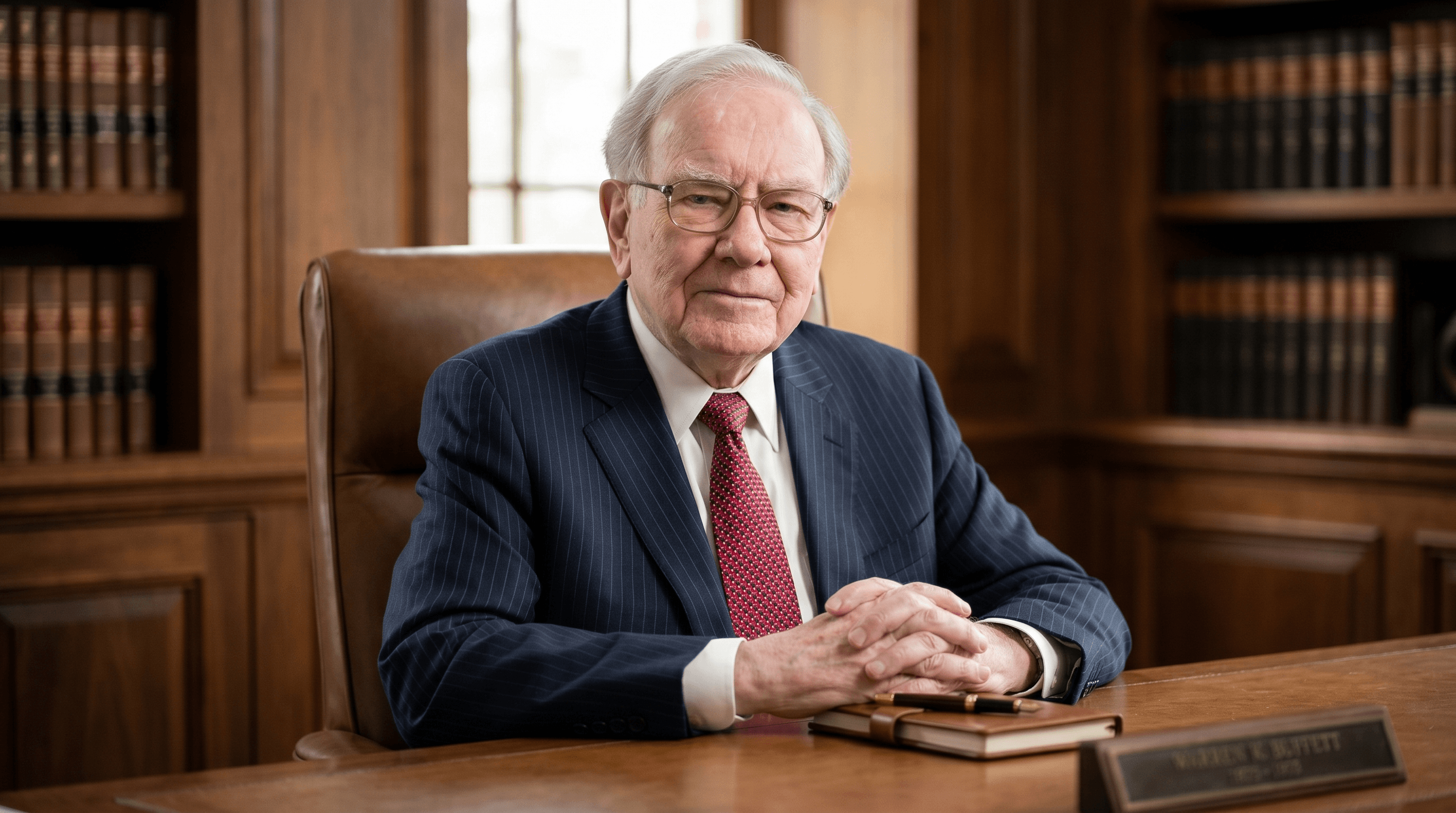
Seth Klarman runs the most quietly disciplined value fund on Wall Street. Baupost has compounded around 20% annually for nearly four decades, and his 1991 book "Margin of Safety" resells used for roughly $1,000 because Klarman has refused to reprint it — by his own choice.
Who Is Seth Klarman?
He is a 67-year-old value investor who has spent four decades quietly outperforming almost every famous money manager you have ever heard of. Klarman runs Baupost Group out of Boston, manages roughly $27 billion in client capital, and has compiled approximately 20% average annual returns since founding the firm in 1982 with about $27 million in seed capital.
He is the closest thing the investing world has to a hidden Buffett. Most professionals know his name. Most retail investors do not. That asymmetry is by design — Klarman declines almost all media interviews, has not done a CNBC appearance in years, and refuses to reprint his foundational book.
The philosophy is essentially Benjamin Graham with cash discipline and credit fluency added. Klarman buys assets at meaningful discounts to conservatively estimated value, holds large cash positions when nothing meets the bar, and aggressively pivots into distressed debt and special situations during panics.
He is also famously concentrated. As of Q1 2026, the top 10 holdings represent roughly 72% of Baupost's disclosed equity portfolio — a level of concentration that would terrify most institutional risk officers.
How Did Baupost Compound 20% for Four Decades?
By doing three things relentlessly: waiting for prices to come to him, sizing aggressively when they did, and refusing to be embarrassed by under-deployment in between. The compound performance is the product of those three disciplines applied over roughly 44 years.
Klarman holds cash for years when nothing meets his margin-of-safety threshold. In 2007, Baupost's cash balance exceeded approximately 50% of fund AUM. When credit markets imploded in 2008-09, that cash was deployed into distressed debt at near-cycle lows — a vintage that produced what Klarman has obliquely described as "exceptional" results.
The 2020 COVID panic was a smaller-scale rerun. Baupost moved cash into distressed credit and select equity positions during the March panic and rotated out by the summer.
The math is brutal: average returns of around 20% mean every dollar invested with Klarman in 1982 was worth approximately $2,200 by 2026 — before fees. No major hedge fund has matched that compound rate over a comparable span.
The 5 Principles Behind Margin of Safety
Klarman's investing rules, distilled from his book and three decades of letters, sit at the core of his process:
1. Loss avoidance is the first job. Klarman has said: "If you can avoid the losers, the winners take care of themselves." Permanent capital impairment compounds in the wrong direction, and his obsession with downside math separates him from most concentrated value investors.
2. Cash is a position. Holding roughly 30% to 50% in cash for years is not failure. It is the discipline that creates the optionality to deploy aggressively during dislocations.
3. Bottom-up always. Klarman does not bet on macro. He buys individual securities one at a time, with a defined margin of safety, ignoring index weights and sector benchmarks.
4. Distressed debt is value investing in fixed income. Most value investors work only in equities. Klarman extended Graham's framework to credit — buying senior secured debt of distressed companies trading at significant discounts to recovery value.
5. Concentration is required. "You cannot generate exceptional returns from a 100-stock portfolio." Baupost has historically held 15 to 30 equity positions. Conviction sizing matters more than diversification once a real margin of safety has been established.
What Does Baupost Actually Own Today?
The Q1 2026 13F filing shows a portfolio that mixes defensive cash-generators with selective cyclical bets. Here are the top disclosed positions:
| Ticker |
Position Weight |
Notes |
| QSR |
~11.0% |
Largest equity holding; doubled share count Q4 2025 to Q1 2026 |
| UNP |
~7.5% |
New top-5 position; railroad with high barriers to entry |
| LBRDK |
~6.5% |
Long-running John Malone-related media position |
| MDT |
~5.5% |
Medical device giant; classic defensive compounding |
| WMG |
~5.0% |
Warner Music; intangible-asset thesis |
| FOXA |
~4.5% |
Multi-year position; cyclical content business |
| HCA |
~4.0% |
Hospital operator; demographic tailwind |
| AGCO |
~3.5% |
Agricultural equipment; deep value entry |
| WSC |
~3.5% |
Mobile space rentals; cash flow compounder |
| BIIB |
~3.0% |
Biotech turnaround; classic Klarman special situation |
QSR is the highest-conviction bet — Restaurant Brands International — and the position size more than doubled quarter over quarter. UNP is the newest top-tier holding; Klarman built it from zero to a top-five weight in a single quarter, signaling unusual conviction.
Notably absent from the portfolio are mega-cap tech names. Baupost has not held meaningful positions in AAPL, MSFT, or NVDA — Klarman has consistently said the AI capex thesis sits above his margin-of-safety threshold at current prices. See our super-investors primer for how this contrasts with peers like BRKB and GOOGL-heavy concentrated funds.
Famous Quotes That Define Klarman's Philosophy
A handful of lines from his letters and book capture the discipline better than any framework can:
"Value investing is at its core the marriage of a contrarian streak and a calculator."
"In a crazy market, the most important thing is not what you buy but what you avoid."
"Investing without rigorous, conservative analysis is a recipe for disaster."
"Most investors are primarily oriented toward return, how much they can make and pay little attention to risk, how much they can lose."
"Risk is not the same as volatility. Risk is the permanent loss of capital."
"The single greatest edge an investor can have is a long-term orientation."
These are not motivational quotes for Instagram. They are operational rules Klarman has applied through six market cycles and three major crises.
What Are the Lessons for Retail Investors?
Three principles translate cleanly from a $27 billion hedge fund to an individual brokerage account.
First, treat cash as a position with optionality value, not idle money. Most retail investors feel guilty holding cash because they are taught that "time in the market beats timing the market." That is true on a 30-year horizon, but it has nothing to do with whether holding roughly 25% cash in expensive markets is wise. Use our investment-strategies primer for the cash-allocation framework.
Second, do real fundamental work on a handful of names instead of skimming dozens. A portfolio of 10 names you understand deeply will outperform 50 names you half-understand, even if the headline diversification math says otherwise.
Third, build a real "margin of safety" rule. This means writing down — before you buy — a price below intrinsic value at which you would buy more, and a price scenario at which you would sell. Without those bookends, you are guessing.
Klarman's biggest contribution may simply be the willingness to do nothing for years. Most retail investors cannot tolerate watching the market rip higher with their portfolio underweight equities. The investors who succeed long-term are the ones who can.
It underperforms badly in long, narrow bull markets driven by mega-cap concentration. Baupost's worst relative years have been 2020-2021 and 2023-2024 — periods where roughly seven mega-cap tech stocks drove the index returns and Klarman was sitting in defensive names, cash, and distressed credit.
The pattern is consistent. Whenever the S&P 500 is up significantly with leadership concentrated in fewer than ten names, Baupost lags meaningfully. When leadership broadens or markets dislocate, Klarman closes the gap fast.
The honest framing: this is a strategy designed to win across full cycles, not to keep up with momentum every year. Investors who cannot accept multi-year periods of relative underperformance should not run a Klarman-style portfolio.
For comparison, see our profiles on Joel Greenblatt and other value-style managers who handle the same trade-off differently.
Ready to analyze these stocks yourself? Search any ticker on MainRatios to see valuations from 6 legendary investors - free.