Oil Surges Past $107 as Iran War Extends: What It Means for Your Portfolio
Crude oil hits $107/barrel as Trump confirms weeks more of conflict. Energy stocks soar while airlines and retailers crater. Here's how to position your portfolio.
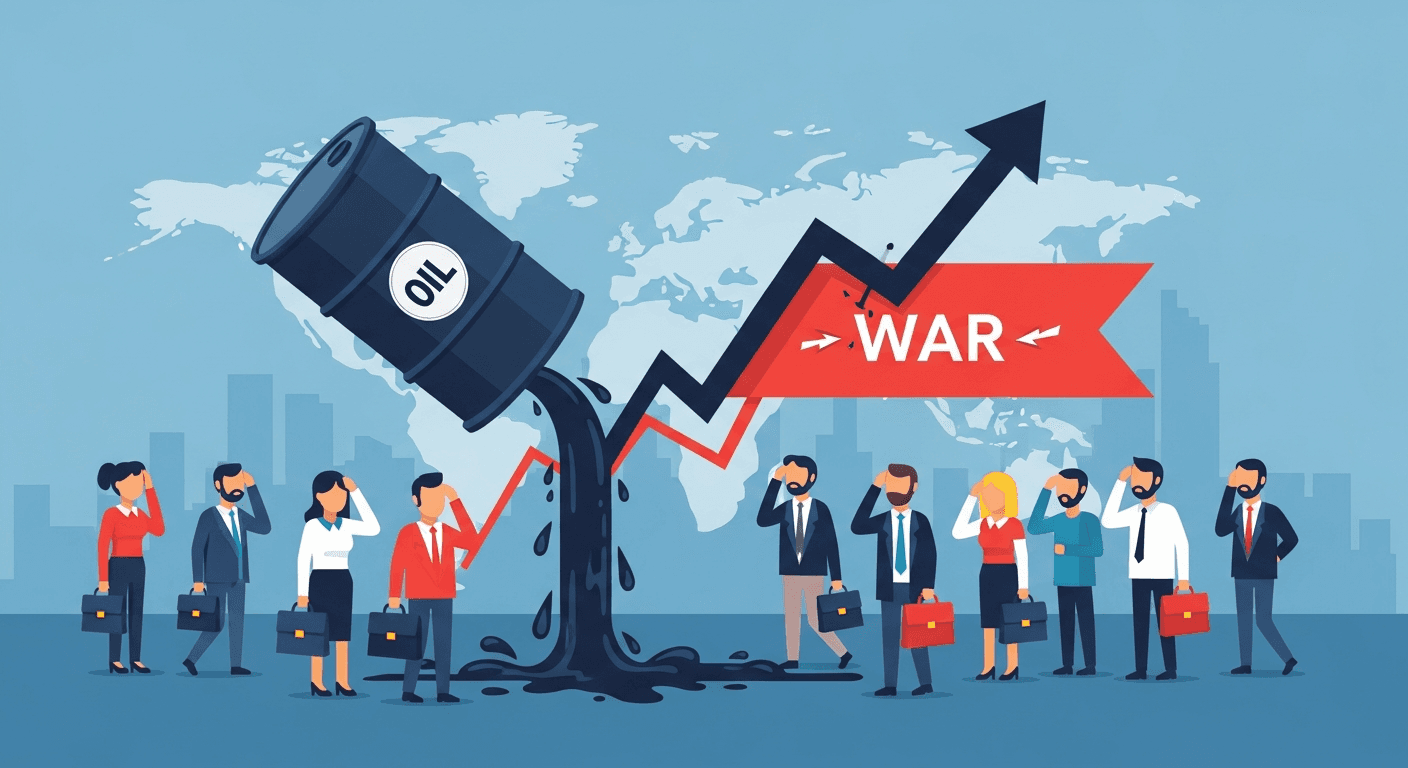
Oil prices haven't seen $107 per barrel since 2014. Now they're back — and the implications for your portfolio are enormous.
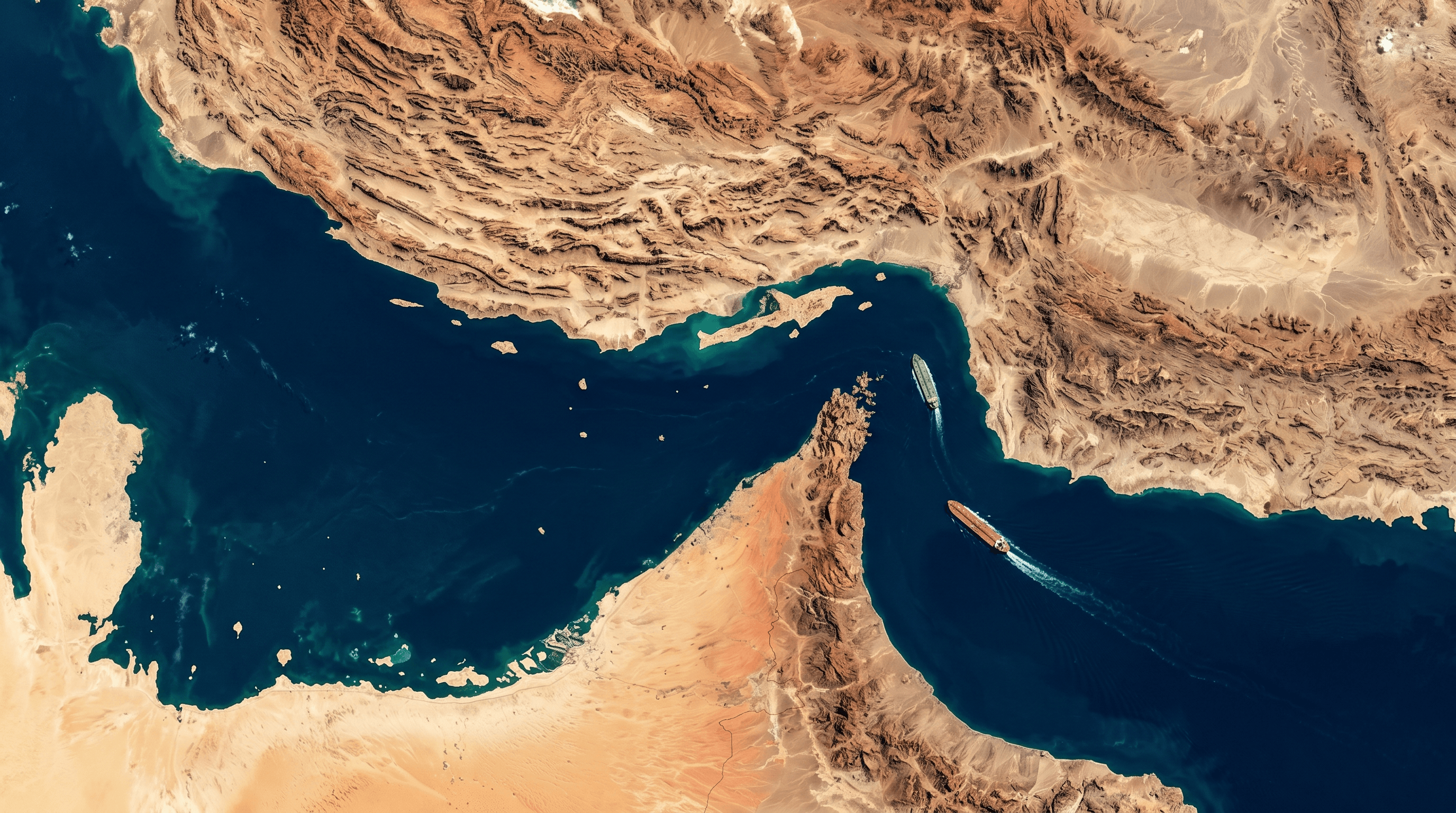
On April 1, 2026, President Trump addressed the nation and confirmed that the U.S.-led military campaign in Iran would continue for at least two to three more weeks. The markets responded with brutal efficiency: West Texas Intermediate crude surged 7.65% in a single session to $107.80 per barrel, the Dow dropped more than 600 points at its intraday low, and safe-haven assets like gold and Treasury bonds rallied sharply.
But here's the thing most investors miss: oil price spikes don't just hurt your gas bill. They ripple through every corner of the economy — from airline margins to consumer spending to Federal Reserve policy. Understanding these second-order effects is what separates smart investors from reactive ones.
The Immediate Market Fallout
The numbers tell a stark story. On April 1, the Dow Jones Industrial Average closed down 61 points at 46,504.67 after recovering from a 600-point intraday plunge. The S&P 500 managed a tiny 0.11% gain to 6,582.69, while the Nasdaq eked out a 0.18% advance to 21,879.18.
But the headline numbers mask enormous sector divergence. Energy stocks surged while consumer discretionary names cratered. The Russell 2000 actually rallied, suggesting small-cap domestic companies may be partially insulated from the geopolitical turmoil.
Asian markets took the hit even harder. South Korea's Kospi plunged 4.47% to 5,234.05, Japan's Nikkei fell 3.1%, and Hong Kong's Hang Seng dropped 2.8%. When the world's largest economy is at war, nobody is safe.
Winners: Energy Stocks Catching Fire
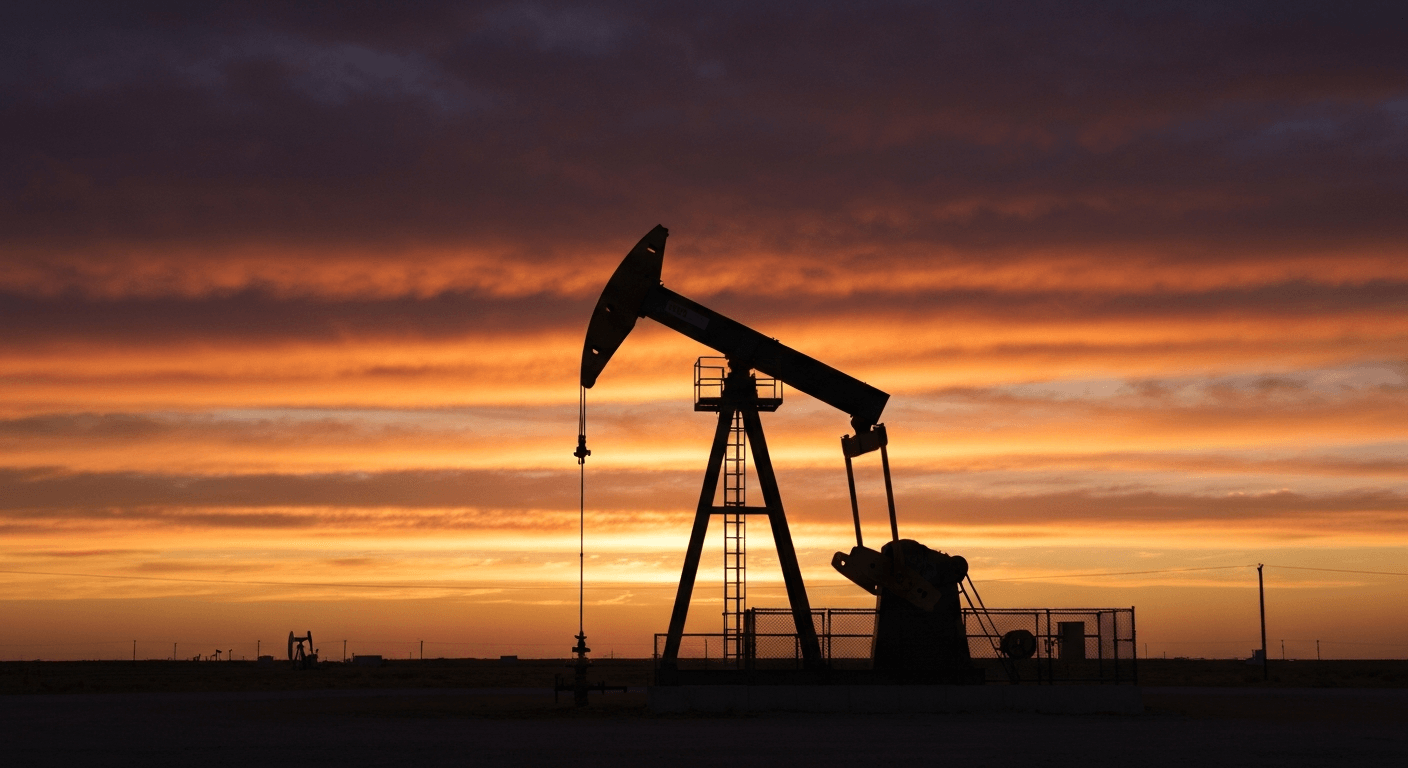
Every crisis creates opportunities. The Iran conflict is a massive tailwind for energy producers who can now sell their oil at decade-high prices. Here are the clear beneficiaries:
ExxonMobil (XOM) is the most obvious winner. As the largest U.S. integrated oil company, Exxon's upstream production margins are exploding at $107 crude. The company reported record quarterly earnings of $14.2 billion in Q4 2025, and Q1 2026 numbers could shatter that figure.
Chevron (CVX) is in a similar position. With major production assets in the Permian Basin and a growing LNG portfolio, Chevron benefits from both crude price appreciation and natural gas demand as Europe scrambles for alternatives to Iranian supply disruptions.
ConocoPhillips (COP) is perhaps the purest play on higher oil prices among the U.S. majors. As a pure-play exploration and production company, nearly all of its revenue is directly tied to commodity prices.
But the winners aren't limited to big oil. Halliburton (HAL) and other oilfield services companies are seeing increased demand as producers rush to maximize output. And pipeline operators like Enterprise Products Partners (EPD) benefit from higher throughput volumes.
| Stock | Sector | YTD Return | Why It Benefits |
|---|---|---|---|
| XOM | Integrated Oil | +18.3% | Record upstream margins at $107 crude |
| CVX | Integrated Oil | +15.7% | Permian Basin + LNG portfolio leverage |
| COP | E&P | +22.1% | Pure-play crude price exposure |
| HAL | Oilfield Services | +14.6% | Rising drilling activity demand |
| EPD | Midstream | +9.2% | Higher pipeline throughput volumes |
| SLB | Oilfield Services | +12.8% | International E&P spending surge |
Losers: Who Gets Crushed by $107 Oil
While energy stocks celebrate, other sectors are getting hammered. The most obvious victims are companies with heavy fuel costs and limited pricing power.
Delta Air Lines (DAL) is set to report earnings next week, and analysts are already slashing estimates. Jet fuel is an airline's largest variable cost, and $107 crude translates to roughly $3.20 per gallon jet fuel — well above the $2.50 level most carriers hedged at. United Airlines (UAL) and American Airlines (AAL) face similar headwinds.
Retail and consumer stocks are also under pressure. Nike (NKE) saw multiple Wall Street price target cuts this week, with shares sliding on concerns that higher energy costs will squeeze consumer wallets and reduce discretionary spending. When gas costs more, people buy fewer sneakers.
The transportation sector is equally exposed. FedEx (FDX) and UPS (UPS) face higher fuel surcharges that can only partially be passed through to customers without losing volume.
The Inflation Wildcard
Here's where it gets really interesting for investors. Oil at $107 per barrel is a direct inflationary input. Every dollar increase in crude oil adds approximately 2.5 cents per gallon to gasoline prices, which feeds into consumer price indexes within 4-6 weeks.
The Federal Reserve had been on a gradual easing path in early 2026, but $107 oil changes the calculus entirely. If core inflation re-accelerates above 3%, the Fed may be forced to pause or even reverse rate cuts — a scenario that would be devastating for growth stocks and real estate.
This creates what economists call a "stagflationary" risk: higher prices combined with slower economic growth. It's the worst of both worlds, and it's exactly the kind of environment that crushed portfolios in the 1970s during the OPEC oil embargo.
Bond yields are already responding. The 10-year Treasury yield dropped to 4.05% as investors fled to safety, but if inflation expectations rise, yields could reverse sharply higher in the weeks ahead.
Historical Context: What Past Oil Shocks Tell Us
History doesn't repeat, but it rhymes. The 2022 oil spike to $130 per barrel following Russia's invasion of Ukraine sent the S&P 500 into a bear market, with the index falling 25% from peak to trough. The 1990 Gulf War spike saw WTI hit $41 per barrel (equivalent to roughly $95 in 2026 dollars), triggering a recession.
But there's an important nuance: the U.S. economy is far more energy-independent today than in previous oil crises. The shale revolution means America produces roughly 13.5 million barrels per day — enough to be a net exporter. This structural shift means the economic damage from high oil prices is partially offset by increased domestic energy revenue.
Still, at $107 per barrel, even a net exporter feels the pain. Transportation costs rise, manufacturing inputs get more expensive, and consumer confidence takes a hit. The question is whether this is a temporary spike that reverses when the Iran conflict ends, or a new sustained price floor.
What Smart Investors Should Do Right Now
First, don't panic. The worst investment decisions are made in the heat of geopolitical fear. Markets tend to overreact to military conflicts and then recover once the initial shock passes. The S&P 500 has delivered positive returns in the 12 months following every major military conflict since World War II.
Second, consider your energy exposure. If you have zero allocation to energy stocks, this is a reminder of why diversification matters. A 5-10% allocation to quality energy names like XOM or CVX can provide a natural hedge against oil price spikes.
Third, watch the earnings reports. Q1 2026 earnings season kicks off next week with major banks. Pay close attention to company guidance on energy costs and margin expectations. The real story won't be in the headline numbers — it'll be in the forward guidance.
Fourth, keep an eye on the Fed. The next FOMC meeting is in early May, and the tone of Fed communications over the next few weeks will signal whether $107 oil has changed the monetary policy outlook.
Finally, if you're a long-term investor, remember that oil prices are cyclical. They spike, they crash, and they mean-revert. The companies worth owning are those that can thrive across the full commodity cycle — not just during the boom times.
Sectors to Watch in the Weeks Ahead
Beyond energy, several sectors deserve careful monitoring as the Iran conflict evolves:
Defense stocks like Lockheed Martin (LMT) and Raytheon (RTX) have already rallied significantly since the conflict began. The question is whether current prices fully reflect the extended timeline or if there's further upside as military spending increases.
Gold miners like Barrick Gold (GOLD) tend to outperform during periods of geopolitical uncertainty and inflationary pressure — both of which are present right now.
Utilities offer defensive characteristics that become more attractive when volatility spikes. Stable dividends and predictable cash flows are exactly what nervous investors crave.
For those interested in understanding how major investors like Warren Buffett evaluate oil companies, check out our super investors analysis section. Buffett famously held a massive position in Occidental Petroleum (OXY) during the last oil cycle, and his investment framework for energy stocks remains highly relevant today.
Key Takeaways
The Iran war's extension to "two to three more weeks" has injected significant uncertainty into markets. Oil at $107 per barrel creates a clear bifurcation between energy winners and consumer losers. The inflation implications could force the Fed to rethink its easing path. And historical precedent suggests this volatility, while uncomfortable, is temporary.
The smartest move right now isn't to make dramatic portfolio changes. It's to understand how oil prices affect different sectors, ensure your portfolio has appropriate diversification, and use the volatility to add quality names at better prices.
For a deeper dive into how fundamental analysis helps during market volatility, including PE ratio analysis and valuation frameworks, explore our educational resources.
Ready to analyze these stocks yourself? Search any ticker on MainRatios to see valuations from 6 legendary investors - free.
See the full analysis of $XOM
Live P/E chart, financials, and valuations from 6 legendary investors — free.
Analyze $XOM